



Professor, University of Manitoba

Professor, University of Manitoba

Dr. Lisa Lix is a Professor of Biostatistics in the College of Community and Global Health at the University of Manitoba and Director of Data Science in the George & Fay Yee Centre for Healthcare Innovation. She holds a Tier 1 Canada Research Chair in Methods for Electronic Health Data Quality. Dr. Lix’s research expertise lies in developing and applying data science methods to electronic health data. She is a prolific researcher who has published more than 475 peer-reviewed papers in scientific journals about data science methods, health outcomes, and use of health services. She currently serves on the Board of the Canadian Society for Epidemiology and Biostatistics and co-leads the AI4PH (Artificial Intelligence for Public Health) National Training Platform.
Assistant Professor, University of Calgary
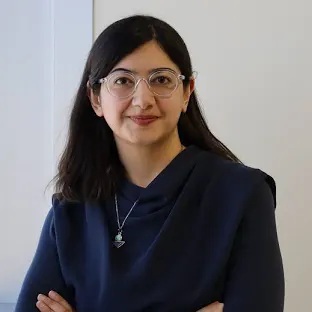
Assistant Professor, University of Calgary

Fateme Rajabiyazdi, an Early Career Scientist, is an Assistant Professor in the Department of Computer Science and the Department of Community Health at the University of Calgary. Her research focuses on developing interactive health data visualization systems. She is a licensed Professional Engineer (Ontario) and an Affiliate Investigator at Bruyère Research Institute. She has secured over $1.66M in research funding and published more than 45 peer-reviewed papers, including award-winning articles. She is recognized with the CHCCS Early Career Researcher Award (2025) and the CMBES Early Career Award (2023).
Professor, Lakehead University

Professor, Lakehead University

Dr. Mushquash is a Canada Research Chair in Indigenous Mental Health and Addiction, and Professor in the Department of Psychology at Lakehead University and the Division of Human Sciences at the Northern Ontario School of Medicine University. He is also Vice President Research at the Thunder Bay Regional Health Sciences Centre and Chief Scientist at the Thunder Bay Regional Health Research Institute.
He is the Director of the Centre for Rural and Northern Health Research at Lakehead University. In addition to his academic appointments, Dr. Mushquash is a registered clinical psychologist providing assessment, intervention, and consultation services for First Nations children, adolescents, and adults at Dilico Anishinabek Family Care.
In 2017, Dr. Mushquash was inducted in the Royal Society of Canada’s College of New Scholars, Artists and Scientists. Dr. Mushquash previously served as a board member for the Ontario Psychological Association, and is currently on the boards of the Canada Foundation for Innovation, and the George Jeffrey Children’s Centre.
Dr. Mushquash is Anishinawbe (Ojibway) and a member of Pawgwasheeng (Pays Plat First Nation).
Associate Professor, McGill University

Associate Professor, McGill University

Carl F. Falk is an Associate Professor of Quantitative Methods and Modeling at McGill University. His research focuses on the development, computer programming, and evaluation of innovative statistical methods and latent variable models with applications across the social, behavioral, and health sciences. This work spans multiple modeling frameworks and topics, including detecting and modeling aberrant responding in survey research, appropriate ways of handling missing and non-normal data, statistical mediation analysis with latent variable models, and techniques for model selection and evaluating model complexity. Carl has over 50 publications in peer-reviewed journals, including methodological publications at outlets such as Psychological Methods, Multivariate Behavioral Research, Structural Equation Modeling, Psychometrika, and Behavior Research Methods. Recent collaborative papers include those in journals such as Quality of Life Research, Psychological Assessment, Journal of Psychopathology and Clinical Science, Pain, and Psychological Medicine. Carl is co-author on three papers that have won research awards from the Quantitative Methods Section of the Canadian Psychological Association. He is also PI or co-investigator/co-applicant on grants from NSERC, SSHRC, CIHR, and FRQNT.


